
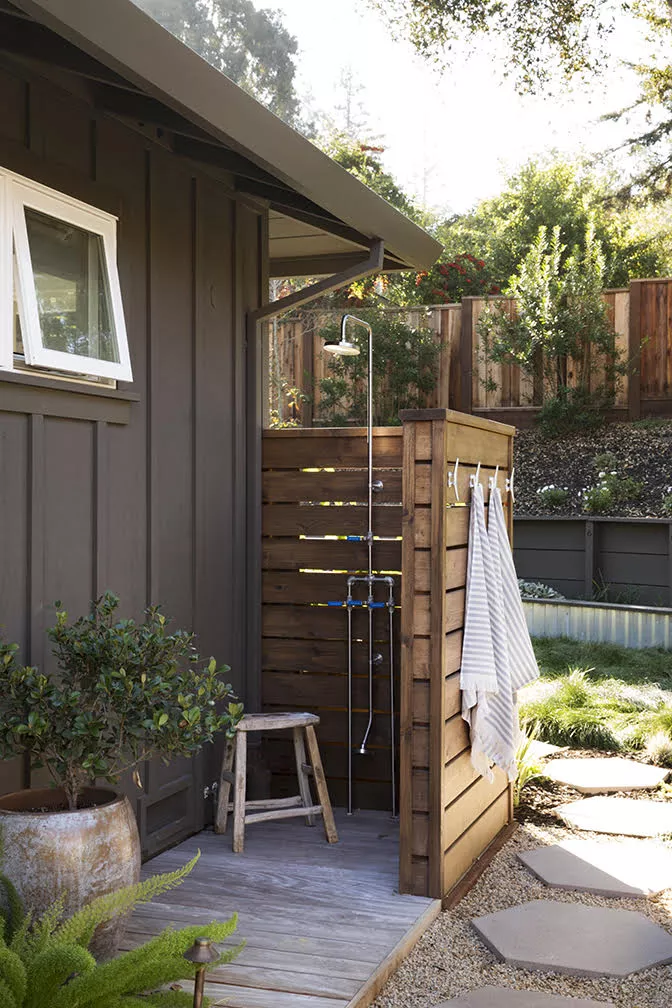
Outdoor showers can make pool areas, gardens, and coastal-style homes more practical by giving people a convenient place to rinse off before going indoors. The best outdoor shower ideas balance privacy, drainage, weather resistance, access, and easy cleaning.
A beautiful enclosure matters, but water management should shape the design first.
Decide How the Shower Will Be Used
A quick poolside rinse needs less privacy and storage than a shower intended for regular bathing. Define the purpose before choosing walls, plumbing, fixtures, or flooring.
Near swimming areas, locate the shower where swimmers can reach it before tracking water through the house. Studying different pool and outdoor layouts can help show how shower zones fit naturally into patios and recreation areas.
Keep the Route Practical
People using an outdoor shower are often barefoot and wet. Avoid long routes across loose gravel, slippery tile, or muddy lawn.
A short path of textured paving or decking can connect the shower comfortably to the pool, house, or changing area.
Build Privacy Around the Actual Sightlines
Tall walls aren’t always necessary. Privacy depends on where neighboring windows, doors, patios, and upper floors are located.
Slatted screens, planted panels, fences, or partial masonry walls can block important views while preserving ventilation. Beach-inspired and rustic outdoor retreats often feel relaxed because they combine natural materials with partial rather than complete enclosure.
| Design Element | Practical Option | Main Benefit |
|---|---|---|
| Floor | Textured pavers | Better grip |
| Screen | Slatted panels | Privacy with airflow |
| Hardware | Outdoor-rated metal | Weather resistance |
| Storage | Wall hooks | Keeps items off floor |
Plan Drainage Before Decorative Details
Water must move away from the shower and nearby structures rather than collecting underfoot. The suitable drainage method depends on soil, local rules, plumbing arrangements, and how frequently the shower will be used.
A floor that looks attractive but remains wet can become slippery or develop algae. Slightly sloped surfaces, suitable drains, and correctly prepared bases generally matter more than decorative tile patterns.
Match Materials to the House and Climate
Cedar, stone, rendered masonry, concrete, tile, and composite boards can all create convincing outdoor showers. Choose materials based on exposure rather than appearance alone.
Planning resources focused on home exterior features can provide broader inspiration for tying the enclosure into patios, fences, and garden structures.
Metal fittings should also be suited to outdoor conditions, particularly in coastal environments where salt exposure can accelerate corrosion.
Common Mistakes to Avoid
One frequent mistake is positioning a shower where runoff reaches doors, foundations, paths, or planting that dislikes excessive moisture. Another is creating an enclosure with poor ventilation, leaving surfaces slow to dry.
Don’t overlook storage either. Hooks, a towel shelf, and somewhere to place soap prevent users from balancing belongings on wet surfaces. And before installing permanent plumbing, check any local requirements that may apply to drainage, wastewater, setbacks, or plumbing work.
Frequently Asked Questions
Does an outdoor shower need a drain?
That depends on its design, frequency of use, soil conditions, wastewater destination, and local rules. Permanent showers generally need more deliberate drainage planning than occasional rinse stations.
What flooring is suitable for an outdoor shower?
Textured stone, outdoor-rated tile, concrete, decking, and some pavers can work. The surface should drain effectively and provide dependable footing when wet.
How can an outdoor shower feel more private?
Position the opening away from neighboring views and use slatted walls, fencing, tall planting, masonry, or layered screens to block important sightlines without eliminating ventilation.
Solve the Practical Details First
Plan the water supply, drainage, privacy, walking route, and weather exposure before choosing decorative finishes. Those decisions determine whether the shower remains convenient after the novelty wears off.
Once the practical layout works, natural wood, stone, plants, hooks, and understated fixtures can give the area its personality. A successful outdoor shower should feel connected to the property rather than added as an isolated feature.