
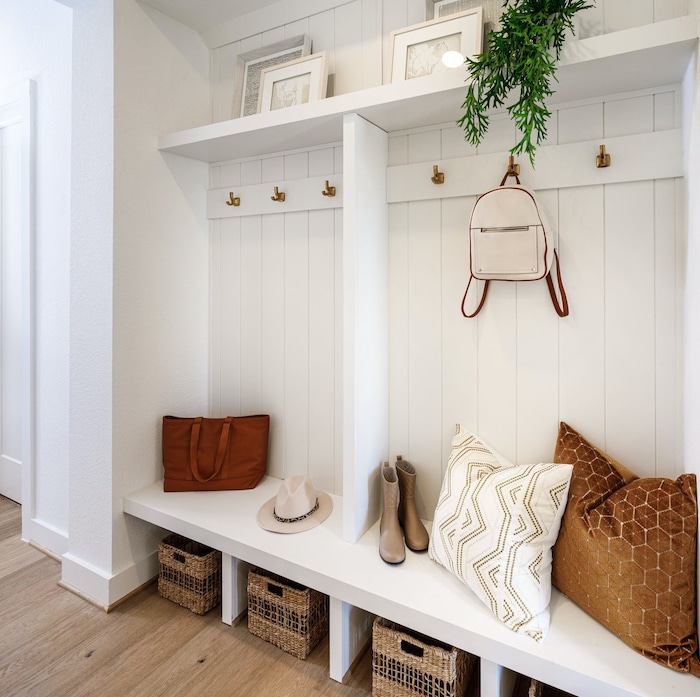
Entryways collect belongings quickly. Shoes land near the door, backpacks reach the floor, and reusable bags seem to migrate into corners. A bench with well-planned cubbies gives those items defined places while providing a convenient seat for putting on or removing footwear.
Divide Storage by Item Instead of Appearance
Perfectly symmetrical cubbies may look attractive, but identical openings aren’t always the most practical choice. Shoes require low compartments, backpacks need more height, and handbags often benefit from an open shelf that prevents them from being crushed.
Start by listing what usually enters the house through that doorway. Then size the storage around those belongings rather than forcing everything into matching squares.
Broader interior organization ideas can help you combine practical storage with finishes that fit the rest of the home’s style.
Give Each Person a Defined Zone
In busy households, assigning individual cubbies can reduce morning confusion. Each person can have a dedicated location for shoes, a bag, and small accessories.
Labels aren’t necessary if the layout is obvious. Position children’s compartments lower and reserve taller or harder-to-reach spaces for adult belongings or occasional items.
Leave Enough Room for Real Shoes
One of the easiest design mistakes is making footwear cubbies too shallow. Sneakers may fit while larger boots, men’s shoes, or winter footwear extend awkwardly beyond the front.
Open-front cubbies are forgiving because they don’t require door clearance. Removable baskets can be added where visual clutter becomes a concern.
| Cubby Type | Best Use | Useful Feature |
|---|---|---|
| Low open slot | Everyday shoes | Fast access |
| Tall compartment | Backpacks | Extra height |
| Basket cubby | Gloves and accessories | Hides clutter |
| Wide shelf | Handbags | Prevents crushing |
Create a Drop Zone Above the Bench
The wall over the bench is valuable storage territory. Hooks can hold coats, backpacks, dog leashes, umbrellas, or reusable shopping bags without occupying the seat.
Keep the arrangement simple enough that belongings remain easy to grab. Ideas from different decor and storage styles can help you avoid turning the wall into a crowded grid of shelves, hooks, signs, and decorative objects.
A shallow shelf above the hooks can hold baskets for seasonal accessories, but it should remain high enough that people don’t bump into it while sitting down.
Protect the Entry From Visual Clutter
Open cubbies work because they’re convenient, yet convenience also means everything stays visible. Using consistent baskets or limiting each opening to one category keeps the bench from looking messy.
If the entry connects directly to a porch or courtyard, studying indoor-outdoor planning ideas may help you decide which belongings should stay inside and which can be stored closer to exterior activity areas.
Durable materials matter as well. Shoe compartments collect moisture, grit, and dust, so smooth washable surfaces generally perform better than delicate finishes.
Common Cubby Problems to Avoid
Tiny compartments may look organized in a drawing but quickly become frustrating when real shoes and bags don’t fit. Too many divisions can also reduce flexibility as household needs change.
Avoid positioning every cubby directly at floor level. Dirt naturally gathers there, and objects pushed far back can be difficult to retrieve. A slightly raised base or removable shelf makes routine cleaning easier. Also leave enough bench surface uncovered that the seating function doesn’t disappear beneath bags and packages.
Frequently Asked Questions
How many shoe cubbies should an entry bench have?
Base the number on everyday footwear rather than every pair owned. Providing space for one or two commonly used pairs per household member keeps the entry useful without turning it into permanent shoe storage.
Should entryway cubbies have doors?
Doors create a cleaner appearance, but open cubbies provide faster access and better visibility. A mixed design often works well, with open shoe compartments below and closed storage for less attractive accessories.
How can you keep bench cubbies organized?
Assign each opening a specific purpose and avoid using empty cubbies as catch-all spaces. Small baskets can contain loose accessories, while occasional decluttering prevents unused shoes and bags from taking over the system.
Build the Drop Zone Around Real Life
The best entry bench doesn’t require everyone to follow a complicated organizing system. Shoes should have an obvious place, bags should be easy to grab, and the seat should remain usable. By sizing compartments around real belongings and keeping frequently used storage accessible, a cubby bench can turn a chaotic doorway into a practical transition point between home and the outside world.


