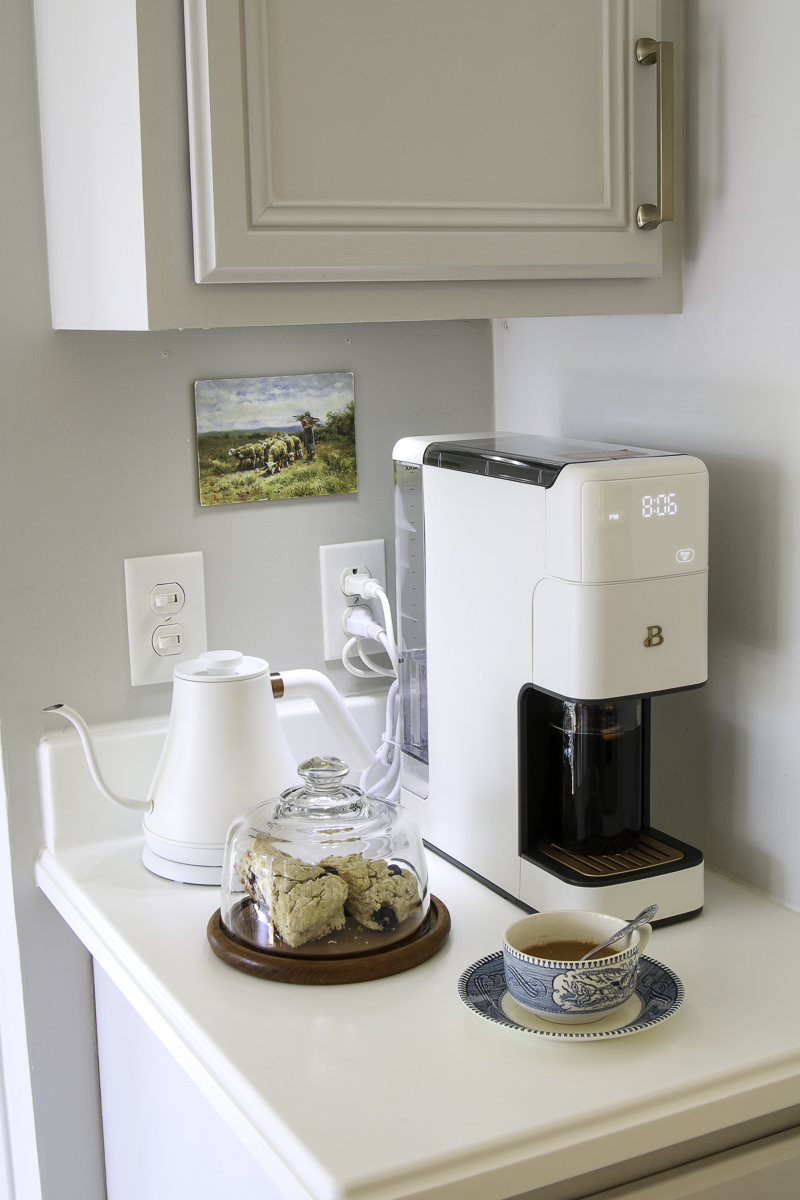
A tea station can turn a scattered collection of kettles, tins, cups, strainers, and sweeteners into one calm preparation area. The most practical arrangement separates heat, water, tea storage, and serving pieces while keeping frequently used items within comfortable reach.
The station can be as small as one tray or as large as a dedicated pantry cabinet.
Start With the Kettle and Safe Pouring Space
The kettle determines where the station should begin. Electric kettles need a convenient outlet and enough clearance for opening the lid. Stovetop kettles naturally keep more of the preparation process near the range.
Leave open space around the kettle instead of surrounding it with tins and cups. Steam, splashes, and frequent movement make a crowded heating area inconvenient.
For visual ideas beyond the tea setup itself, refined home inspiration can help you think about how a beverage station relates to cabinetry, shelves, and nearby décor.
Store Tea by Type and Frequency
Loose-leaf tea is easier to manage when containers are labeled clearly. Group black, green, herbal, oolong, and specialty blends in whatever categories make sense for your household.
Keep everyday varieties near the front. Rare blends, refill packages, and seasonal teas can occupy the back or upper portions of the cabinet.
| Tea Supply | Suggested Storage | Practical Goal |
|---|---|---|
| Daily loose tea | Labeled closed tins | Quick selection |
| Tea bags | Divided box or drawer | Easy sorting |
| Strainers | Small drawer or cup | Prevents loss |
| Extra stock | Cool cabinet | Reduces crowding |
Make Cups Easy to Reach Without Overfilling Shelves
A tea station doesn’t need every cup and teapot you own. Keep a small selection of daily cups and one frequently used pot nearby.
Open shelving can create a relaxed look, especially when the broader space draws from comfortable home and porch styling. Yet shelves should remain practical enough that cups can be removed without rearranging decorations first.
Give Teapots Their Own Space
Teapots are awkward to stack and can be fragile. A cabinet shelf with enough vertical clearance is usually safer than squeezing several together.
If you own multiple pots, keep the everyday option nearest the station and reserve the rest for entertaining or special teas.
Create a Small Zone for Add-Ins
Honey, sugar, lemon tools, teaspoons, strainers, and reusable infusers can spread across a counter quickly. Give them one contained location, such as a shallow drawer or small tray.
Ideas related to organized living spaces can help when deciding which items deserve permanent countertop space and which belong behind a cabinet door.
If fresh milk or lemon is used frequently, positioning the station near the refrigerator reduces extra movement.
Mistakes That Make Tea Stations Less Useful
Too many tea containers can turn selection into searching. Keeping dozens of unlabeled packets in deep baskets may technically hide clutter while making individual teas difficult to find.
Heat is another overlooked issue. Tea should not be stored directly beside a hot kettle or other appliance simply because the arrangement looks compact. A small amount of separation between brewing equipment and stored leaves creates a better long-term setup.
Frequently Asked Questions
What containers are good for loose-leaf tea?
Opaque or well-sealed containers that limit exposure to air, moisture, light, and strong odors are practical choices. Labels with the tea name can also prevent repeated opening while searching.
Can a tea station share space with a coffee bar?
Yes. Shared mugs, sweeteners, and water supplies can make a combined beverage station efficient. Keep tea leaves away from strong coffee aromas and allow enough counter area for both brewing methods.
Where should tea bags be stored in a small kitchen?
A shallow drawer, divided organizer, small lidded box, or narrow cabinet shelf can work. Sorting by tea type keeps the collection easier to use without requiring a large countertop display.
Keep the Ritual Simple
The strongest tea station isn’t the one with the largest collection. It is the one that lets you heat water, choose tea, grab a cup, and prepare your drink without searching through several cabinets. Organize for frequency first, protect the tea from unsuitable storage conditions, and allow the setup to remain pleasantly uncluttered.